
Shop
GCSE Science Course


GCSE Science Course
The Pass GCSE Science online course is designed to help you prepare for and pass your exam first time, enabling you to achieve your GCSE Science qualification. This qualification can support entry into university and help improve future career opportunities.
-
Market-Leading GCSE Science Course - Fully online learning with 24/7 access. Around 100 hours of study recommended.
-
Includes Everything You Need To Pass - Features revision notes, practice questions, mock exams, and built-in progress tracking. Edexcel IGCSE students also get video tutorials.
-
Fast-Track GCSE Science Qualification - Work towards your qualification in under 12 months.
 Now available online.

 Spread the cost over up to 6 months




Got a question?
We'd love to talk about how we can help you.

Give yourself the best possible chance of success in your exam...
Study GCSE Science online with our comprehensive course, designed to help you build subject knowledge, improve future career prospects, or meet entry requirements for university or apprenticeships.
We offer courses for three exam board specifications, so you can study the one that matches your school, college, or personal entry requirements:
- Edexcel IGCSE Single Award Science (4SS0)
- Edexcel IGCSE Double Award Science (4SD0)
- AQA Combined Science Trilogy (8464)
Please note that our Personal Learning Plan, Subject Knowledge Assessments (SKAs), Topic Area Knowledge Assessments (TAKAs), ExamReady tracking, and video lessons and solutions are only available on the Edexcel IGCSE course. These features are not currently available on the AQA course.
Enrol now, or get in touch using the contact form below and we'll discuss your course options and help you get registered.
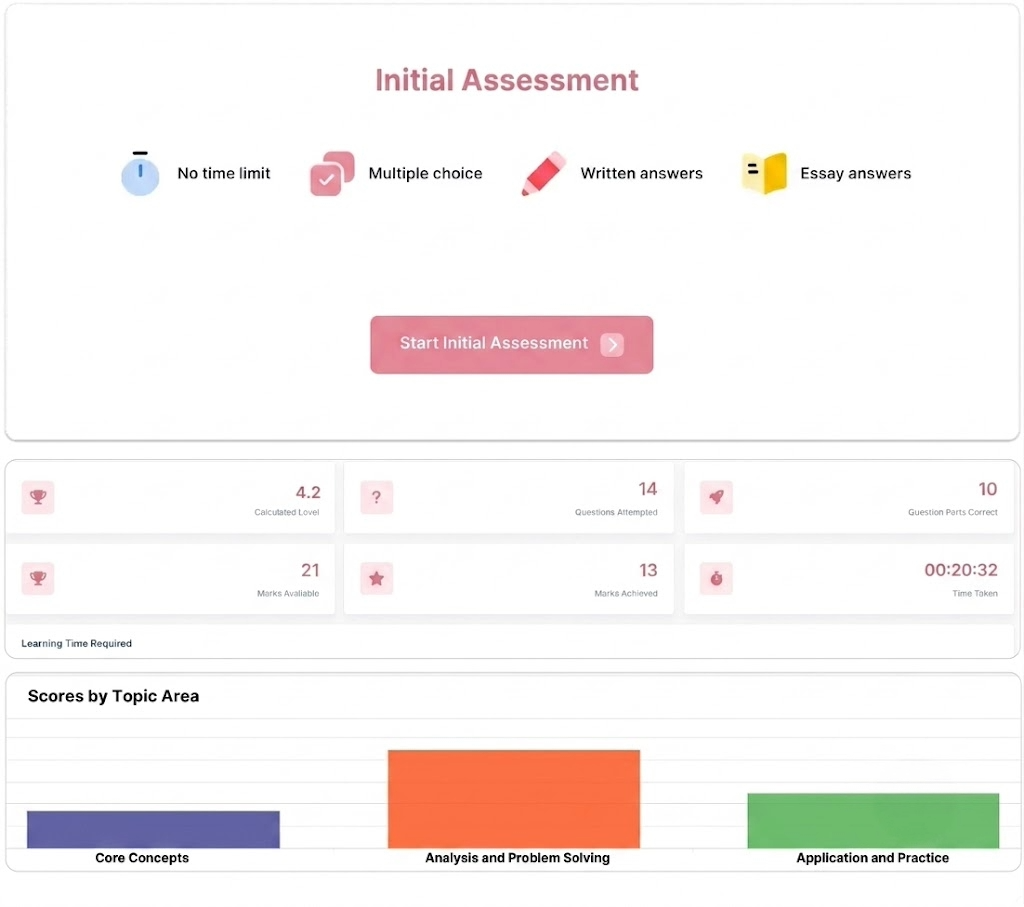
Determine your initial level
Take our quick Initial Assessment to find your starting point.
Enrol on your course
Complete your enrolment online, or get in touch and our team will help set up your account.
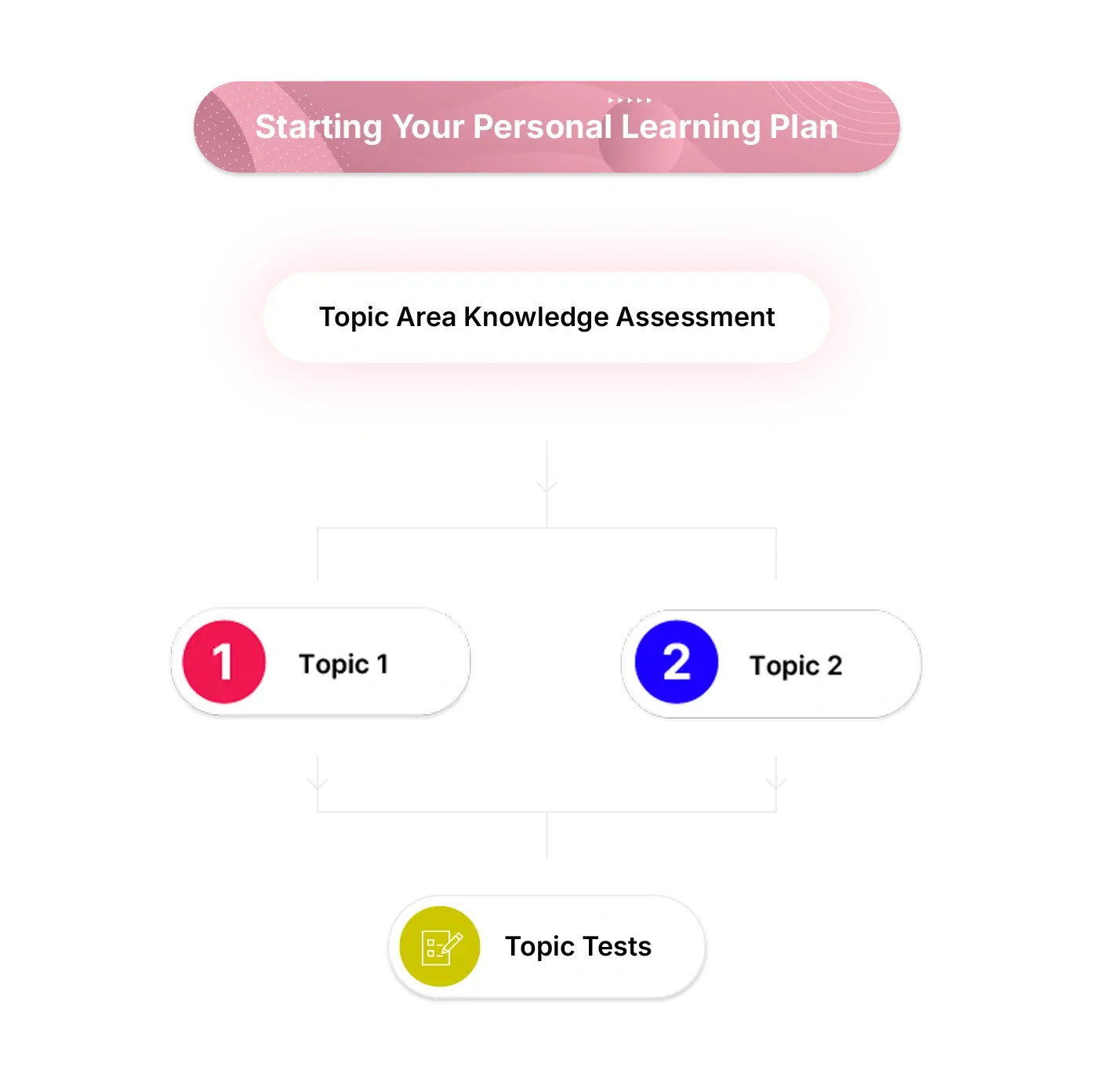
Get your Personal Learning Plan
Complete our Topic Area Knowledge Assessments to build a revision plan tailored to you.
Work through course content
Learn effectively using a combination of expert revision notes, practice questions, and topic-based assessments.
Complete exam-board-specific mock exams
Practise under timed exam conditions with mock exams tailored to your exam board.
ExamReady
Use our smart tracking feature to know exactly when you're ready to sit your GCSE Science exam.

Market-Leading GCSE Science Course
Our market-leading GCSE Science course is delivered 100% online with 24/7 access, allowing you to study at your own pace, with around 100 hours of recommended study time.

Includes Everything You Need To Pass
The GCSE Science course includes all the resources you need to succeed, including revision notes, practice questions, mock exams, and built-in progress tracking. If you’re studying the Edexcel IGCSE route, you’ll also get video tutorials.

Fast-Track GCSE Science Qualification
Revise for and complete your GCSE Science exam in less time than traditional school or college routes. Achieve your qualification in under 12 months, or even within 6 months.

GCSE Science Exam & Course Option
Book your GCSE Science course alongside the Ofqual-regulated exam as a discounted bundle, available to private candidates, resit learners, and adult learners.
1 Determine your initial level
Before you begin, take our quick Initial Assessment to find out where you're starting from. This gives you an accurate baseline of your current GCSE Science knowledge across the key topic areas.
More Details
A short, free assessment covering the core topic areas.
Instantly see your current working level before you enrol.
Sets the baseline your Personal Learning Plan and ExamReady tracking are built from.
2 Enrol on your course
Complete your enrolment onto the GCSE Science course online, or get in touch via the contact form and one of our friendly team will be happy to talk through your options and get you set up.
More Details
Enrol online in minutes, or over the phone with a member of our expert team.
We'll help you choose the right exam board and options for your goals.
Enrolling unlocks full access to every course feature, so you're ready to start revising straight away.

3 Get your Personal Learning Plan
Once you're enrolled on your course, start with our Topic Area Knowledge Assessments.
These build you a personalised revision plan that highlights the areas you most need to improve, so you spend your time where it counts.
There's a separate Knowledge Assessment for each topic area, whether you're studying Biology, Chemistry, Physics, or Combined Science, so nothing gets missed.
Your plan is unique to you, giving you a clear revision journey built around your own strengths and weaknesses.
4 Work through course content
Our online GCSE Science course is organised into clear topic areas, each mapped to the exam board specifications, whether that be Edexcel IGCSE Single Award, Edexcel IGCSE Double Award, or AQA Combined Science Trilogy Foundation/Higher. Every topic includes written revision and video lessons, practice questions, and topic assessments to support effective revision and exam preparation.
Revision notes created by expert tutors for every topic, with video lessons for Edexcel IGCSE
Clear revision covering everything you need to know, along with guidance on the best ways to approach and answer exam questions.
Build confidence with practice questions
Strengthen your understanding from the revision sections using short, multiple-choice practice questions.
Test yourself with topic tests featuring varied question types
Answer a range of exam-style questions for each topic to help prepare you for the real exam.
Written solutions for all questions
Every question includes clear written solutions, explaining how to reach the correct answer.
5 Complete exam-board-specific mock exams
Practise in real exam conditions with exam-board-specific mock exams featuring automatically marked questions.


AI-marked questions and feedback
For longer written responses, our advanced AI marking system provides instant, in-depth feedback that closely reflects the standard of a teacher or examiner. This means you can identify mistakes straight away, improve more quickly, and build confidence ahead of your exams, without waiting for manual marking.
Extended written response questions marked by AI.
Immediate marks and detailed feedback.
Feedback comparable to that of a teacher or examiner.

6 ExamReady
Behind the scenes, our platform keeps track of every result you achieve, gradually building a full picture of how you're progressing through GCSE Science. It all comes together in your personal dashboard, showing your overall course completion, progress topic by topic, and your average scores across the tasks you've finished. At the centre of it all sits ExamReady, a smart feature that uses your performance data to work out when you're genuinely prepared to sit your GCSE Science exam. It's a feature unique to Pass, designed to take the guesswork out of exam preparation.
How to know you're ExamReady
Complete all Topic Area Knowledge Assessments
Complete your Personal Learning Plan
Score above 60% (AQA Foundation), 50% (Edexcel IGCSE), or 30% (AQA Higher) on a mock exam
Above your recommended current level
access wherever
per subject
all year round
All GCSE Science Course Features
Still unsure? Here's a full breakdown of everything included in our online GCSE Science course.
Revision Notes and Video Lessons
Each topic includes written revision notes and (for Edexcel IGCSE) expert-led video lessons, clearly explaining the key scientific content and effective approaches to answering exam questions.
Practice Questions
Put what you've learned into practice with quick, multiple-choice questions, designed to reinforce understanding and build confidence.
Topic Tests
Once you're confident with the revision and practice questions, test your knowledge using exam-style topic tests to strengthen your understanding.
Full Mock Exams
Complete full mock exams for major exam boards, featuring auto-marked questions and solutions to help you identify areas for improvement.
Written Solutions
Every question is supported by clear written solutions, showing the most effective way to reach the correct answer.
Comprehensive Progress Tracking
Track your performance across the course with detailed insights into scores, averages, and completion percentages, so you always know how you're progressing.
Edexcel IGCSE Science Course Content
The Edexcel IGCSE Science specification is divided into 18 topics, shown below. Select each topic to view its subtopics. You can find the full specification documents for both the Edexcel IGCSE (4SS0) Single Award and the Edexcel IGCSE (4SD0) Double Award on Pearson’s website.
AQA GCSE Science Course Content (Foundation)
We have courses for both the Foundation and Higher Tiers of AQA GCSE Combined Science: Trilogy (8464). Click on each unit below to see the topics within it. Our courses are built to the exam board’s specification to ensure you have everything you need to pass your exams.
AQA GCSE Science Course Content (Higher)
FAQs
Is this course suitable for GCSE science resits?
Yes, this GCSE science course is suitable for students sitting their retake science GCSE. We have courses specifically built for the exams for the following exam boards:
Do you provide GCSE science courses for adults?
Yes, we do offer GCSE science courses for adults! Our online GCSE science courses are suitable for all learners, whether you are just out of school, or an adult learner returning to education! Study GCSE science online with Pass GCSE today!
Do you offer online GCSE science courses?
Yes, we only provide online GCSE science courses and do not provide physical versions, since we believe that this system provides students with much more. All of your attempts and results are stored, and all of your results tracked so you don’t have to. Study for your science GCSE online with Pass GCSE!
Do you provide free GCSE science courses?
Our GCSE science courses are paid, which has meant that we can spend more resources on making it the best course we can. Our courses are set below the average market price, making them more accessible for students.
What is included with the GCSE science online learning?
Study GCSE science online with Pass GCSE and gain access to comprehensive revision notes, 1000’s of questions and full mock exams, with full progress tracking.
How long will it take for me to complete the online GCSE science course?
We recommend around 100 hours study time for your GCSE science online course, however this is just a guideline. You can spend as long as you like on our course, with 24/7 access.
You May Also Like...


Secure Shopping at Pass GCSE
All payment details you send us are shielded via SSL encryption.
Ways to Pay
We accept all major credit / debit cards, PayPal, Apple Pay & Google Pay.
Helping you buy
Having trouble? Call our customer support team:
020 3633 2975